
Table of Contents
Key Takeaways
- Shockwave therapy is a non-invasive ED treatment that stimulates blood vessel growth, nitric oxide production, and tissue regeneration.
- Penile injections involve direct delivery of vasoactive drugs into the penis, producing rapid erections independent of sexual stimulation.
- Shockwave therapy effects appear gradually over weeks, while injections work within minutes.
- Injections provide temporary, on-demand results; shockwave therapy may offer longer-term improvements in erectile function.
- Choice depends on ED severity, underlying cause, tolerance for invasiveness, and preference for spontaneity.
- A combination approach shockwave therapy for vascular health and injections for immediate erections can be considered under medical supervision.
Erectile dysfunction (ED) can be treated using a variety of approaches, including non-invasive therapies like shockwave therapy and more direct interventions such as penile injections. Both treatments aim to improve erectile function, but they differ in mechanism, invasiveness, frequency, and suitability for different patient profiles. Understanding the benefits, limitations, and clinical considerations of each option helps men make informed decisions with guidance from healthcare professionals.
How Shockwave Therapy Works
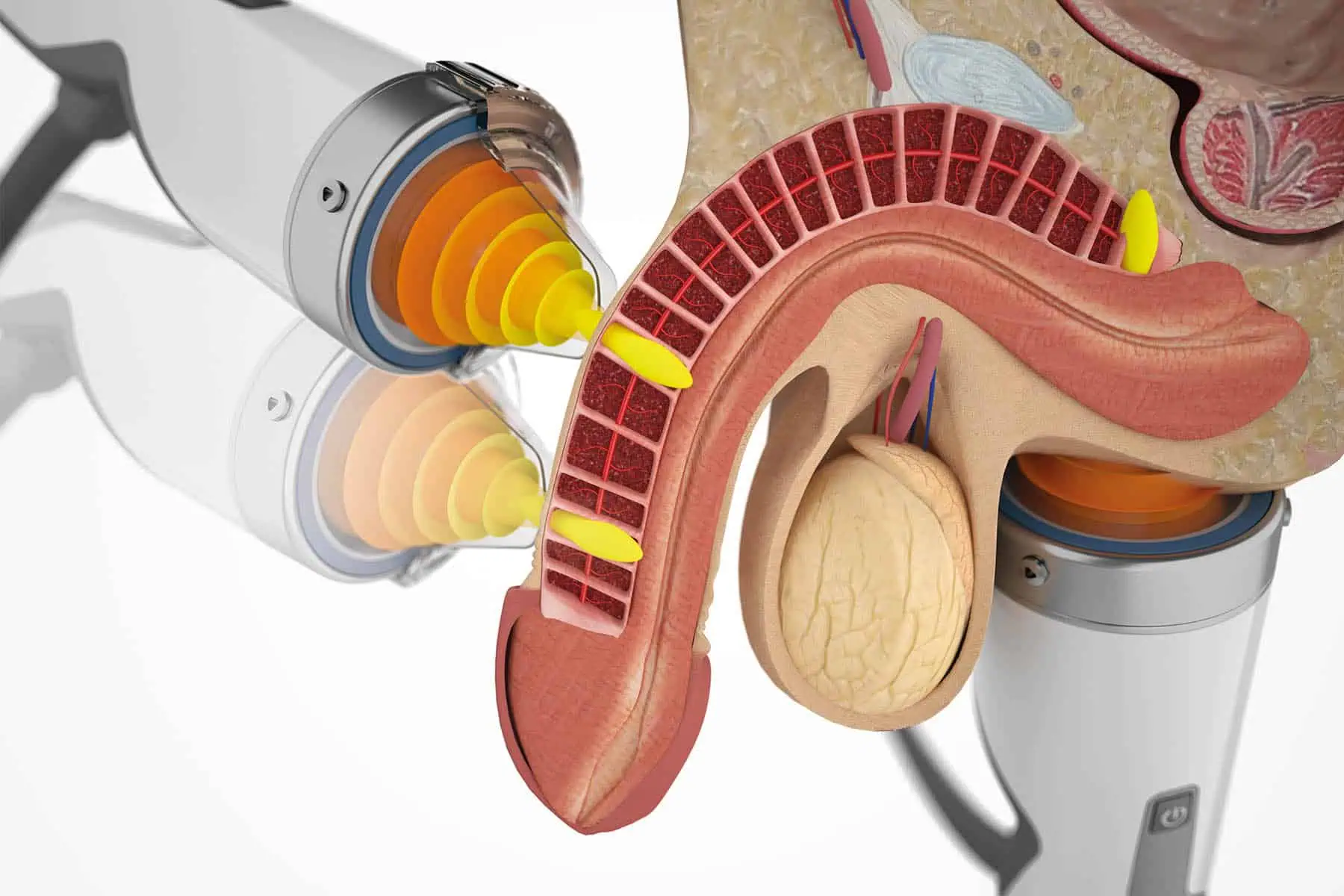
Low-intensity extracorporeal shockwave therapy (Li-ESWT) is a non-invasive procedure that uses acoustic waves to stimulate penile tissue. The therapy is typically administered over multiple sessions, targeting the corpus cavernosum and penile blood vessels.
Mechanism of action:
- Angiogenesis stimulation – Shockwaves trigger the formation of new blood vessels, improving penile circulation.
- Nitric oxide production – Acoustic waves increase nitric oxide release, enhancing smooth muscle relaxation and blood flow.
- Tissue regeneration – Shockwaves may promote repair of damaged penile tissue and improve endothelial function.
Treatment protocol:
- Usually 6–12 sessions over 3–6 weeks
- Each session lasts 20–30 minutes
- Non-invasive, generally painless with minimal side effects
Benefits:
- Non-invasive and needle-free
- Potentially restorative rather than just symptomatic
- Low risk of complications
Limitations:
- Effects may take weeks to appear
- Multiple sessions are required
- Not suitable for men with severe vascular disease or advanced ED
How Penile Injections Work
Penile injections involve injecting vasoactive substances directly into the corpus cavernosum to induce an erection. Commonly used medications include alprostadil, papaverine, and phentolamine.
Mechanism of action:
- Direct vasodilation – The drugs relax smooth muscle and dilate penile arteries.
- Immediate erection – Injection produces an erection independent of sexual stimulation in most cases.
Treatment protocol:
- Usually administered on an as-needed basis before sexual activity
- Self-injection after proper training by a healthcare professional
- Effects typically last 30–60 minutes depending on medication
Benefits:
- Rapid onset of action (often within 5–20 minutes)
- Effective for men who do not respond to oral medications
- Can be titrated to achieve optimal erection quality
Limitations:
- Invasive and requires needle use
- Risk of side effects such as pain, priapism (prolonged erection), or fibrosis
- Requires patient comfort and manual dexterity for self-injection
Comparing Shockwave Therapy and Injections
Feature | Shockwave Therapy | Penile Injections |
Invasiveness | Non-invasive | Invasive (needle) |
Mechanism | Stimulates blood vessel growth, tissue repair | Direct vasodilation via medication |
Onset of Effect | Weeks after treatment | Minutes after injection |
Duration of Benefit | Potentially long-term if vascular regeneration occurs | Temporary, typically 30–60 minutes |
Frequency | Multiple sessions over weeks | As-needed before sexual activity |
Side Effects | Mild discomfort or bruising | Pain, priapism, fibrosis risk |
Suitability | Mild to moderate ED, early intervention | Severe ED, unresponsive to oral medications |
Which Option Is Right for You?
Shockwave therapy may be suitable if:
- You have mild to moderate ED
- You prefer non-invasive treatment
- You want a therapy aimed at long-term tissue improvement
- You are motivated for multiple treatment sessions
Penile injections may be suitable if:
- Oral medications like PDE5 inhibitors are ineffective
- Rapid, reliable erections are needed
- You are comfortable with needle-based treatment
- You require an as-needed, on-demand solution
Considerations Before Choosing
- Underlying cause of ED – Vascular issues may respond better to shockwave therapy if mild, while severe nerve or endothelial damage may necessitate injections.
- Tolerance for invasiveness – Fear of needles may make shockwave therapy preferable.
- Desired timing and spontaneity – Injections offer immediate effect, while shockwave therapy requires planning and patience.
- Medical supervision – Both treatments should be administered under guidance from a urologist or ED specialist.
Potential Combination Approach
Some clinicians may recommend a combination of therapies:
- Shockwave therapy for long-term vascular improvement
- Injections for immediate erectile function during the treatment period
This approach allows men to experience both restorative and symptomatic benefits simultaneously.
Conclusion
Shockwave therapy and penile injections are effective ED treatments but serve different needs. Shockwave therapy is non-invasive, potentially restorative, and suited for men seeking long-term vascular improvement. Penile injections provide rapid, reliable erections, making them ideal for men unresponsive to oral medications or who require immediate effect. Choice of therapy depends on ED severity, underlying causes, patient preference, and medical guidance. Consulting a healthcare professional is essential to determine the most appropriate option based on individual health status and lifestyle.
Frequently Asked Questions (FAQ)
Which treatment works faster for ED?
Penile injections produce erections within 5–20 minutes, while shockwave therapy requires multiple sessions, with effects appearing over weeks.
Is shockwave therapy painful?
Shockwave therapy is generally non-invasive and well-tolerated; mild discomfort or bruising may occur in some men.
How long do the effects last for each treatment?
Injections produce temporary erections lasting 30–60 minutes, whereas shockwave therapy may provide longer-term improvement in vascular function after a full course.
Who is a candidate for shockwave therapy?
Men with mild to moderate ED, early-stage vascular issues, or a preference for non-invasive treatment are usually suitable candidates.
Can both treatments be combined?
Yes. Some clinicians recommend using shockwave therapy to improve long-term vascular health and injections for immediate erectile function during the treatment period.